Aug 23rd (Sun) 14:30~ @JMS ASTER PLAZA Medium Hall
Program Overview
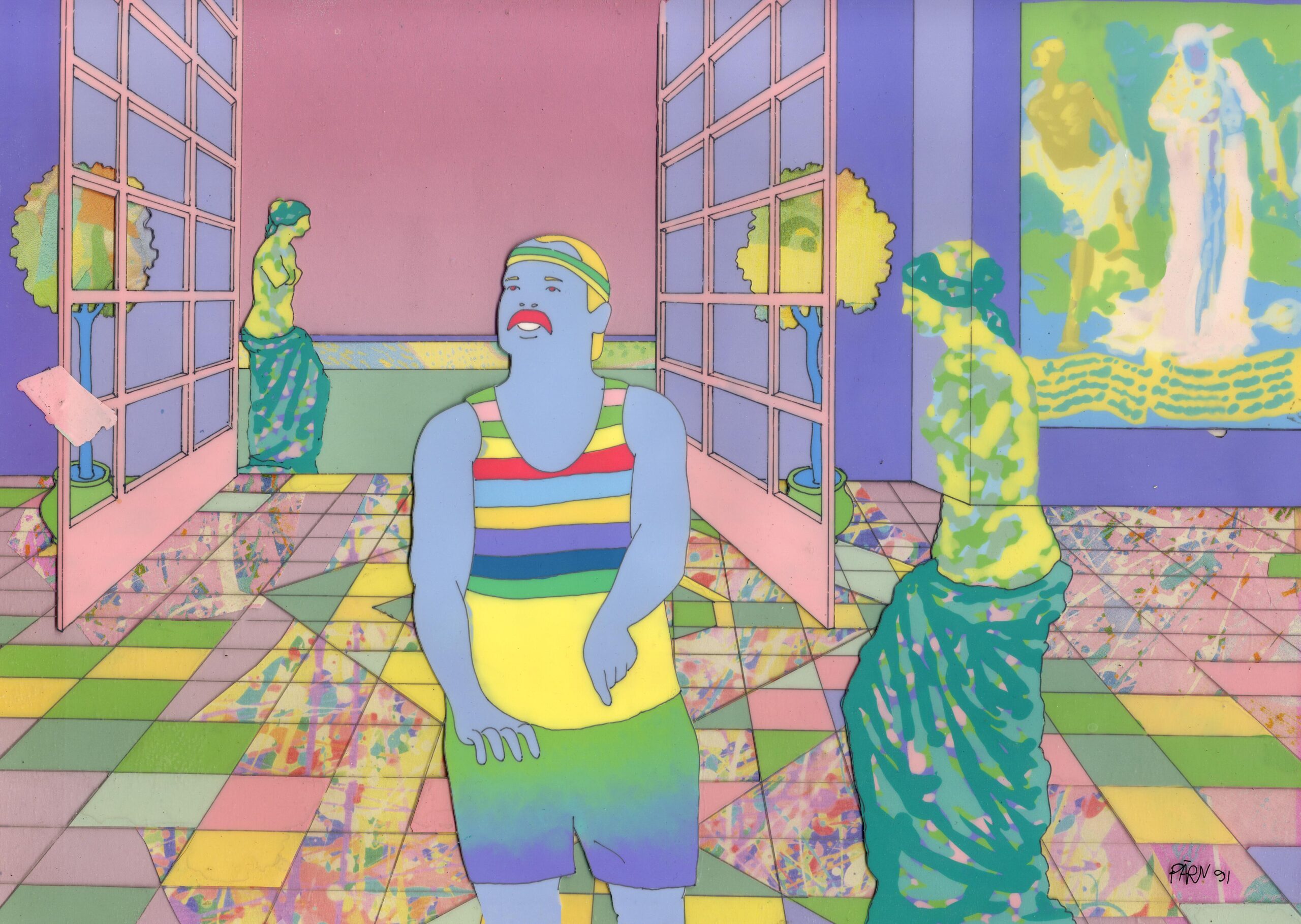
Prior to HAS2026, the festival conducted a survey titled 120 Years of Short Animation (1906–2026), inviting animation filmmakers and professionals working across the Pan-Pacific and Asia to select their twelve favorite short animated films from the history of animation. Among the filmmakers most frequently cited in the survey, Priit Pärn stood out as one of the most influential voices. This program focuses on his early works and presents the films that were selected by the survey participants.
(Curator: Nobuaki Doi)
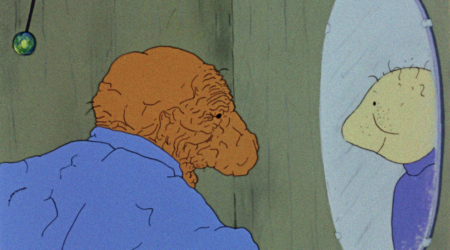
In the film “Is the Earth Round?” (1977/ digitally restored 2006) a young boy sets off to prove the Earth is round. If the world were flat, he would only have to go halfway to prove it. As long as he keeps on going in a straight line, the boy figures, he will eventually get back to where he started from. We actually see two journeys in this film: a trip around the world and the story of a boy growing into a man.
“It was pretty much my own problem – up to a certain point in my life my greatest goal was to travel as far as I possibly could,” says Pärn. “It seemed to me that this was what life was all about.” This young man decides to leave. His friends stayed put and now, years later, they have nice houses. The man returns poor and alone, but at least he has seen the entire world. Besides slaying a tiger, finding hidden treasure and being captured by pirates, the world traveller catches a glimpse of the world-famous yellow submarine.
His debut was allowed to be screened in Estonia, but was banned in the rest of the Soviet Union. Accustomed to fairy tales, the bosses in Moscow were suspicious of the film’s meaning right away. After all, it is not an everyday thing to see a cow, whose black patches form a map of the world which rises into the air and falls back down to earth in the form of a thundershower. As a newcomer to Estonian animation, Pärn understood that there was another way of getting a message across – tricks.
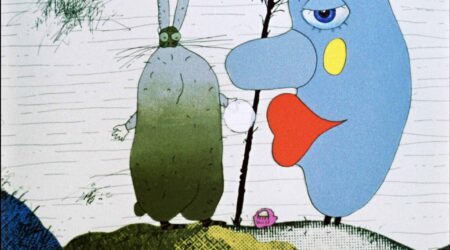
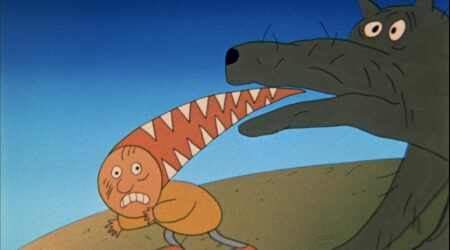
Priit Pärn’s second film (following “Is The Earth Round?”). A small green bear entertains the neighborhood with all kind of tricks, until he is suddenly denounced as a nuisance…
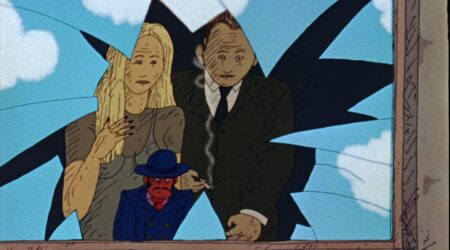
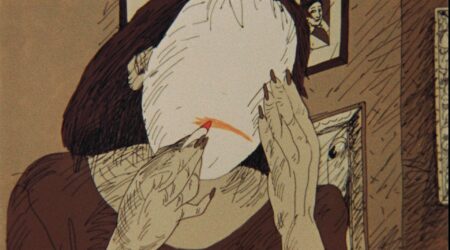
Chris Robinson writes that "The Triangle is considered a landmark in Estonian animation for its examination of modern relations between a man and a woman; it fuses the personal and political into a witty observation of contemporary domestic politics.“ As we know, history is written by the victors – and thus a true Viktor must justify his name and re-establish his credibility at home. As the coup de grace in a power struggle that plays out within four apartment walls, even a fractured wedding picture jumps back on to the wall all by itself at the end of the film.
The film is a new telling of a well-known story. "There is an old folk tale about a little man who lives under the stove, he comes out, asks for something to eat, and then eats you out of house and home,“ says Pärn. The love triangle between Julia, Viktor and the little man under the stove, Eduard, introduces the Soviet male and female archetypes. No matter who is sitting at the table reading a newspaper – Viktor or little Eduard – Julia cooks meals with the same devotion. It was a time when Pärn discovered the appeal of cooking as a game: chopping onions, flipping pancaces, moulding caces, the shaping and and rapid hand movements was a catalyst for his idea generator and a novel animated film was born.
The hero of this film which has earned many awards, is a small cat with a long striped tail. The little animal bustles about the room doing morning house chores. He is already busy with the next one before he has properly completed the previous one. He becomes hopelessly confused in his daily routine. The alarm clock spring snaps under the strain. Time transforms radically and assumes fantastic proportions. In place of the routine and harshly reglemented ordinary world, the cat finds himself in an entirely peculiar world of games where all sorts of adventures await him. He experiences all sorts of unimaginable comical transformations characteristic of Priit Pärn based on visual associations which are possible in animated film only. Yet it is not possible to remain in this happy, colourful world forever. The hand of the artist as deus ex machina puts the alarm clock back in its usual place.
If any film could be considered a symbol of this period, it had to be “Breakfast on the Grass” (1987). Chris Robinson writes that many consider it one of the greatest animated films ever. The film proved irresistible throughout the
USSR with its candid glimpse into Soviet life back then. Trossek believes that the music written by Olav Ehala was a key factor that underlined the film’s seriousness; it was consistently in the prog rock style, which was perceived as intellectual. “It is the description of a very specific society depicted realistically using dramatic structure reminiscent of a feature film.
But the story is told through the medium of animation – with visual jokes, metamorphoses and various styles of drawing. I am trying to make a serious film funny, multi-layered and ironic,” says Pärn in shedding light on the film’s back-story.
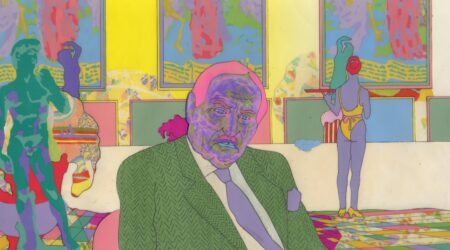
It took four years for the screenplay to be approved by Moscow. It was the most problematic challenge so far. One official was even said to have told Pärn that “no film like that will get made”. The result was a film that shows the absurdity of the Soviet system in an artistically more compelling form than ever before. Kall says that it is a story of an artist who got his foot caught between the doors of a bus in a totalitarian society. There are references to Picasso, who journeys as a homeless artist from story to story in this film. Pärn himself says that it was originally supposed to be a story about four people
getting ready for a party, and everyone is looking for provisions for the big gathering. Then Manet made an appearance and then four stories in different styles. In the end the entire story became about selling out, about stooping. Every character debased himself in some way in this system. Anna sold herself for apples, Georg consented to everything to get a black overcoat and white slacks, Berta had to give up her child to get her face back and Eduard sucked up to a lady with upstairs connections to sneak him into her boss’s office to get a stamp on an access permit of a garden. After the gates of paradise are opened, Lieutenant Pärn, the winner of tens of awards, claimed that he would not make another film.
In every wall that separates, one can find a door. A door which connects. Victor finds such a door. Faceless, nameless Victor is prepared to go. Yet every departure is also an arrival. Every arrival, however, is not a return. Victor has begun a dangerous game…
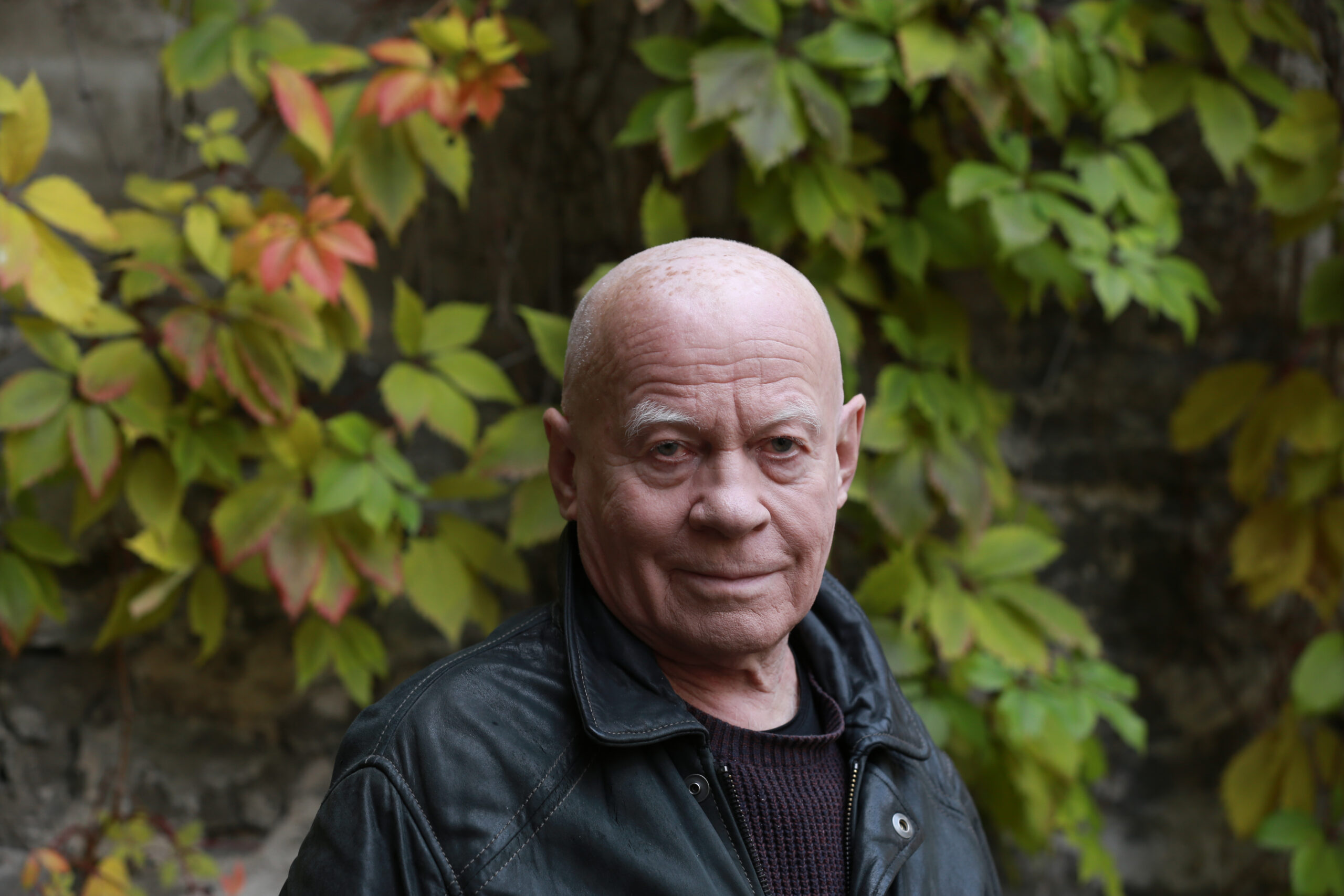
Priit Pärn
Born on August 26, 1946 in Tallinn. Graduated from the Department of Biology at the University of Tartu in 1970.
Worked at the Botanical Garden of Tallinn as a plant ecologist from 1970 to 1976. Worked as animated film director in Tallinnfilm Studio since 1976 and at Eesti Joonisfilm Studio since 1994.
Has been active as a caricaturist and illustrator since the end of the 1960's and received a lot of prestigious international awards for his caricatures. From the early 1980's he have been working more and more as freelance graphic artist. Pärn has had over 50 solo graphic exhibitions allover the World. Pärn has made 18 animated films as director, scriptwriter and art director. He received more than 80 awards from world top festivals, including 22 Grand Prix. With his films and graphic style he influenced a lot of filmmakers, working in independent and commercial fields of animation around the world. As teacher he has taught at film schools in Finland, Norway, Germany, Switzerland, Czech Republic, Spain, Belgium, Hungary, Holland, Bulgaria, Japan, Croatia, China, Turkey, France, Canada, Australia, USA and England.
In 1994 Pärn established animation studies in Turku(Finland) and served as the artistic director of the animation department of the Turku Academy of Arts until 2007. This department won the prize for the World Best animation school at Ottawa Animation film festival in 2003.
Pärn was also the founder of the animation department of the Estonian Academy of Arts in 2006 and professor until 2019. Students tutored by him won over 140 prizes in international animation film festivals.
Pärn has received nine Lifetime Achievement awards: from the ASIFA, IFF Etiuda&Anima (Poland), Fredrikstad AF(Norway), IAFF Zagreb Animafest (Croatia), Luna de Valencia Award from Valencia IFF Cinema Jove (Spain), The Dragon of Dragons Award from Krakow IFF (Poland), State Lifetime Achievement Award of Estonia and others.
From 2006 Priit is working together with his wife Olga as co artists and co directors.