HAS Presents: In Tribute to the Animators 2024-2026
SCHEDULE
Aug 22nd (Sat) 12:45~ @JMS ASTER PLAZA Grand Hall
Program Overview
This program features works by deceased filmmakers who made significant contributions to the world of short animation. Artistic Director Koji Yamamura will provide commentary during the screening.
Curator: Koji Yamamura
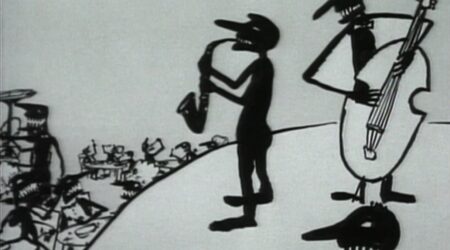
A part-time musician gets off his day job as a window washer for a disturbing apartment complex to a gig for a charity event. The rich arrive, and the food runs low. Luckily, there are the homeless and other non-economic contributors around to fit the bill.
The Sexlife of a Chair
Phil Mulloy
United Kingdom
1997
7:00
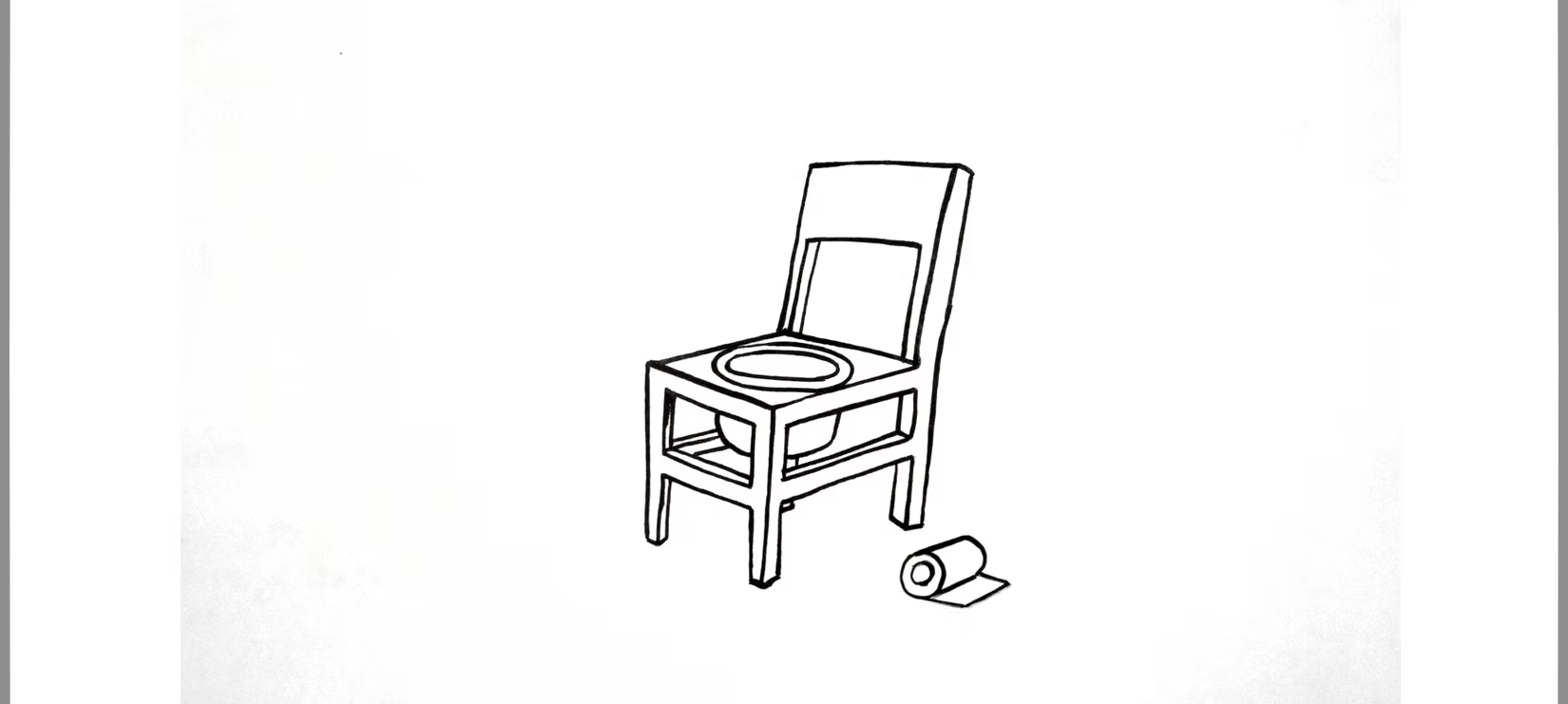
Presented in the format of a report on medical research, the sex lives of various "chairs" are recounted in a matter-of-fact tone.
Phil Mulloy
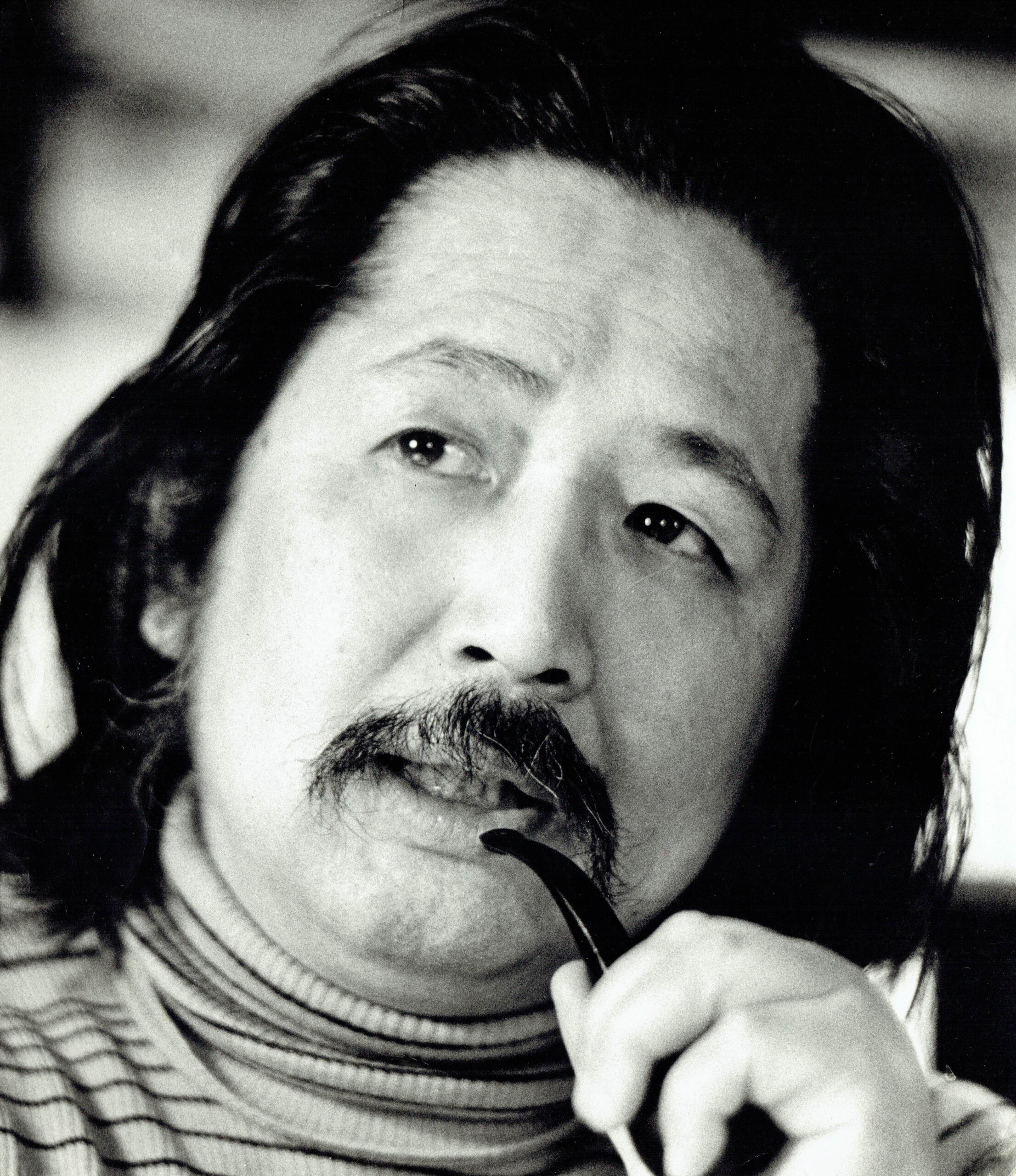
(1948–2025) A British animator born in Wallasey, Cheshire. After studying painting and film, he shifted his focus to animation in earnest during the late 1980s. He established a distinctive style characterized by skeletal, black-ink characters set against minimalist, absurd backgrounds. His notable works include "Cowboys", "The Ten Commandments", and "Intolerance III: The Final Solution". He depicted human folly, ideology, and violence with biting humor. Having created over 60 films and garnered international acclaim, he continued his creative work until his passing at the age of 76, leaving behind a unique and provocative legacy.
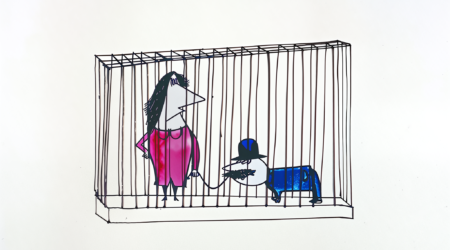
I listened to the tape of "Clap Vocalism"—a vocal composition by Toru Takemitsu—and thought it would be interesting to create an animation based on it.
At first, the story was about a man defeating a woman, but I decided it would be more interesting to reverse the roles, which is how it ended up taking that form.
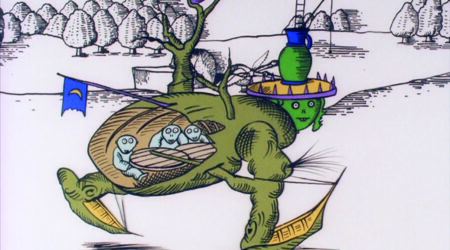
A night when green, strangely shaped parasites devour human beings—a scene depicting an unending, cruel food chain and the eternal cycle of life and death. This is a grotesque and bizarre fable created by Yoji Kuri.
Isao Tomita’s synthesizer music resonates quietly yet eerily.
The request for the musical score was made to Isao Tomita after the animation itself had been completed.
Tomita’s synthesizer-based score—cutting-edge for its time—imbues the work with a unique atmosphere.
Yoji Kuri
Born in Sabae City, Fukui Prefecture, in 1928.
Moved to Tokyo in 1950 to pursue a career as a manga artist and studied under Taizo Yokoyama.
Worked as a part-time illustrator in the pictorial news department of Kyodo News, drawing topical single-panel satirical cartoons.
Studied at the Department of Fine Arts at Bunka Gakuin and at Athénée Français.
Established the Kuri Experimental Manga Workshop in 1958. Won the 4th Bungeishunju Manga Award for his self-published collection, Yoji Kuri Manga Collection.
Began creating animation in 1960. Along with Hiroshi Manabe and Ryohei Yanagihara, he formed the "Animation Sannin no Kai" (Animation Group of Three) and organized animation film festivals at the Sogetsu Art Center. He interacted with various artists and released experimental animations. At the festival, he encouraged leading figures such as Osamu Tezuka, Makoto Wada, Akira Uno, and Tadanori Yokoo to produce animation, laying the foundation as a pioneer of early Japanese independent animation. His masterpiece "Human Zoo" won 11 grand prizes at film festivals worldwide. He served as a jury member at numerous international film festivals, where exhibitions and retrospective screenings of his work were also held.
Since the early days of Japanese television, his animations were broadcast every Monday on the late-night show 11PM, where he also made regular appearances. He created animations for NHK's Minna no Uta (Songs for Everyone) and the opening sequence of Hyokkori Hyotanjima, and designed the logo for Nippon TV's 24-Hour Television.
Presented works at three pavilions at the 1970 World Exposition in Osaka (Expo '70).
Began focusing fully on painting from around the 1980s. To date, his solo exhibitions have been held at prestigious venues worldwide, including the Museum of Modern Art (MoMA) in New York, the Musée d'Art Moderne de Paris, the Yamanashi Prefectural Museum of Art, the Ikeda Museum of 20th Century Art, as well as in Ghent (Belgium) and Stuttgart (Germany). He became the first Japanese artist to design the cover for the Swiss graphic arts magazine Graphis. Served as the chairperson of the executive committee for the "International Kamaboko Board Painting Competition / Small Art Exhibition." Held the "Recycle Art Exhibition" at Shibuya PARCO and Shibuya Seibu Department Store. Appointed as Honorary Director of the Sabae City Manabe-no-Yakata Museum, where the permanent "Yoji Kuri Room" was established.
Awarded the Medal with Dark Blue Ribbon in 1982, the Medal with Purple Ribbon in 1992, a second Medal with Dark Blue Ribbon in 1996, and the Order of the Rising Sun, Gold Rays with Rosette in 2011.
In 2016, his 500-page manga collection Crazy Manga, which he drew at the age of 88, won the Grand Prize in the Cartoon Division at the Japan Cartoonists Association Awards. In the same year, he changed the official spelling of his name to katakana, actively working as Yoji Kuri ever since.
Appointed as the International Honorary President of the Hiroshima International Animation Festival in 2018. Hosted the experimental music and animation event "Channeling with Mr. Yoji Kuri." A large-scale retrospective exhibition titled "The Great Adventure of Yoji Kuri" was held at the Kanazu Forest of Creation Museum in Fukui.
Participated in the exhibition "Humor in Design" at 21_21 DESIGN SIGHT in Roppongi in 2019, while concurrently holding the solo exhibition "Crazy House."
Has continued to hold solo exhibitions every year up to 2023. While remaining an active creator, he has also begun archiving his extensive body of work.
The Sand Castle
Co Hoedeman
Canada
1977
13:00
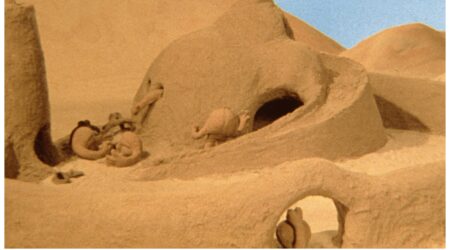
A fable of great humour and appeal, The Sand Castle is the story of the Sandman and the creatures he sculpts out of sand. Under his direction, they build a castle and celebrate the completion of their new home, only to be interrupted by an uninvited guest. The wind blows, and the castle crumbles. The filmmaker leaves the door open to various interpretations. Sound film without words.
The Cardinal
Co Hoedeman
Canada
2016
6:44
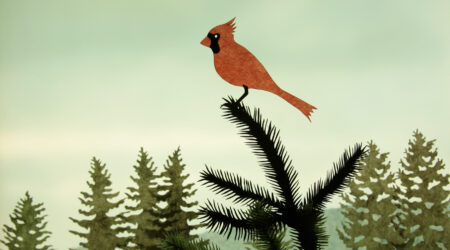
“The cardinal” concerns a young girl whose childhood is affected by a parent suffering from Post Traumatic Stress Disorder (PTSD) after serving as a peacekeeper in a foreign country.
Co Hoedeman
A master of stop-motion animation, Dutch-born filmmaker Co Hoedeman (1940–2025) first came to Canada in 1965 at the age of 25, moving from Amsterdam to Montreal after seeing the films of Norman McLaren. Director of 20 NFB classic films, Co received the Academy Award for Best Animated Short Film for his 1977 short The Sand Castle. A devoted father and grandfather, he was the creator of the beloved children’s series Four Seasons in the Life of Ludovic. Experimenting with an astounding range of techniques, Hoedeman conjured up fantastic worlds, finding inspiration in Inuit traditional stories, humanitarian themes and his vivid imagination.
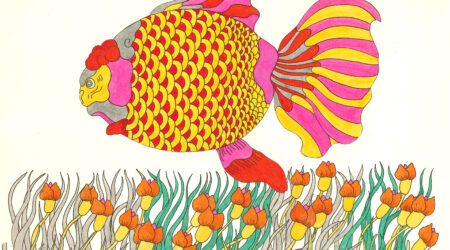
This animated film depicts morning on Tanaami’s favorite day of the week, Friday, set to light-hearted music. It follows his waking routine of washing his face, wiping his glasses, eating breakfast, and taking a shower. Various scenes from his imagination are interspersed among these daily actions with a flicker effect that evokes experimental films. Images include a sparrow he projected with a magic lantern as a child, goldfish his grandfather kept during World War II, and white female nudes, all juxtaposed without apparent connection, reflecting a morning mental state of interplay between the fantastical and the mundane. The inclusion of a letter and photographs from his close friend Ushio Shinohara offers a glimpse into Tanaami’s actual personal life.
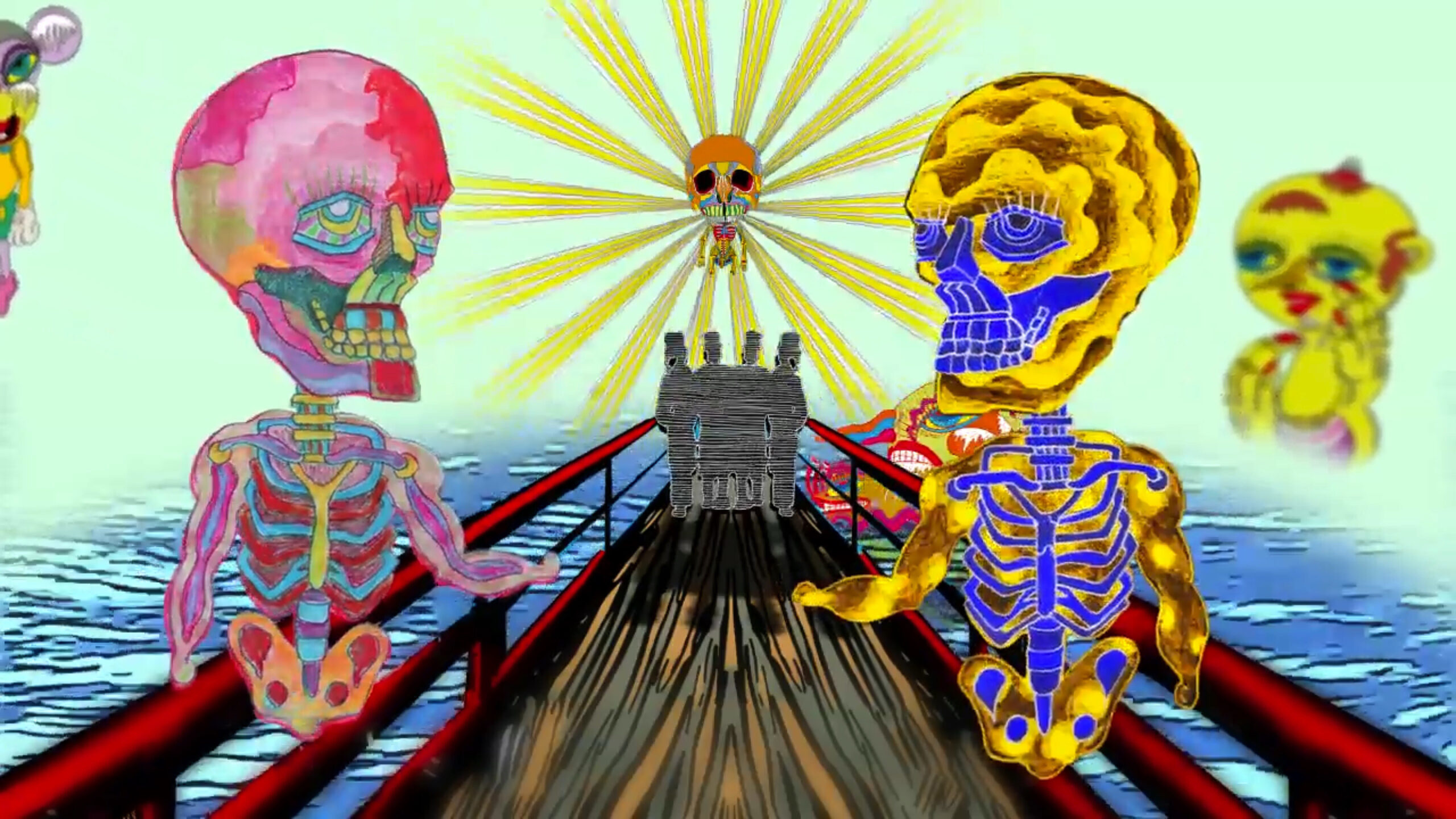
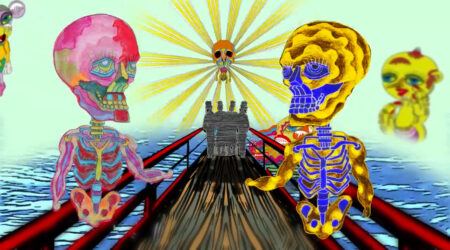
This animated film visualizes Tanaami’s profound reflections on the bridge as a crossroad connecting this world and the afterlife. For Tanaami, the red bridge—serving as a boundary between the sacred and the profane, life and death, as well as a place of encounter—has been a major driving force for his recent imagination. The screen is interspersed with numerous motifs reminiscent of his childhood wartime experiences: bizarre glowing creatures representing personified bombs and explosions, vertical beams of light reflecting Japanese searchlights tracking American bombers, and skeletal monsters embodying war-wounded people. Additionally, characters tied to his core memories, such as his grandfather’s goldfish and a lively pine tree derived from hallucinations during a life-threatening illness at age 44, appear sequentially. Originating from drawings he has created daily for over half a century, these unique characters invite viewers into a mysterious, fathomless alternative space beneath the bridge.
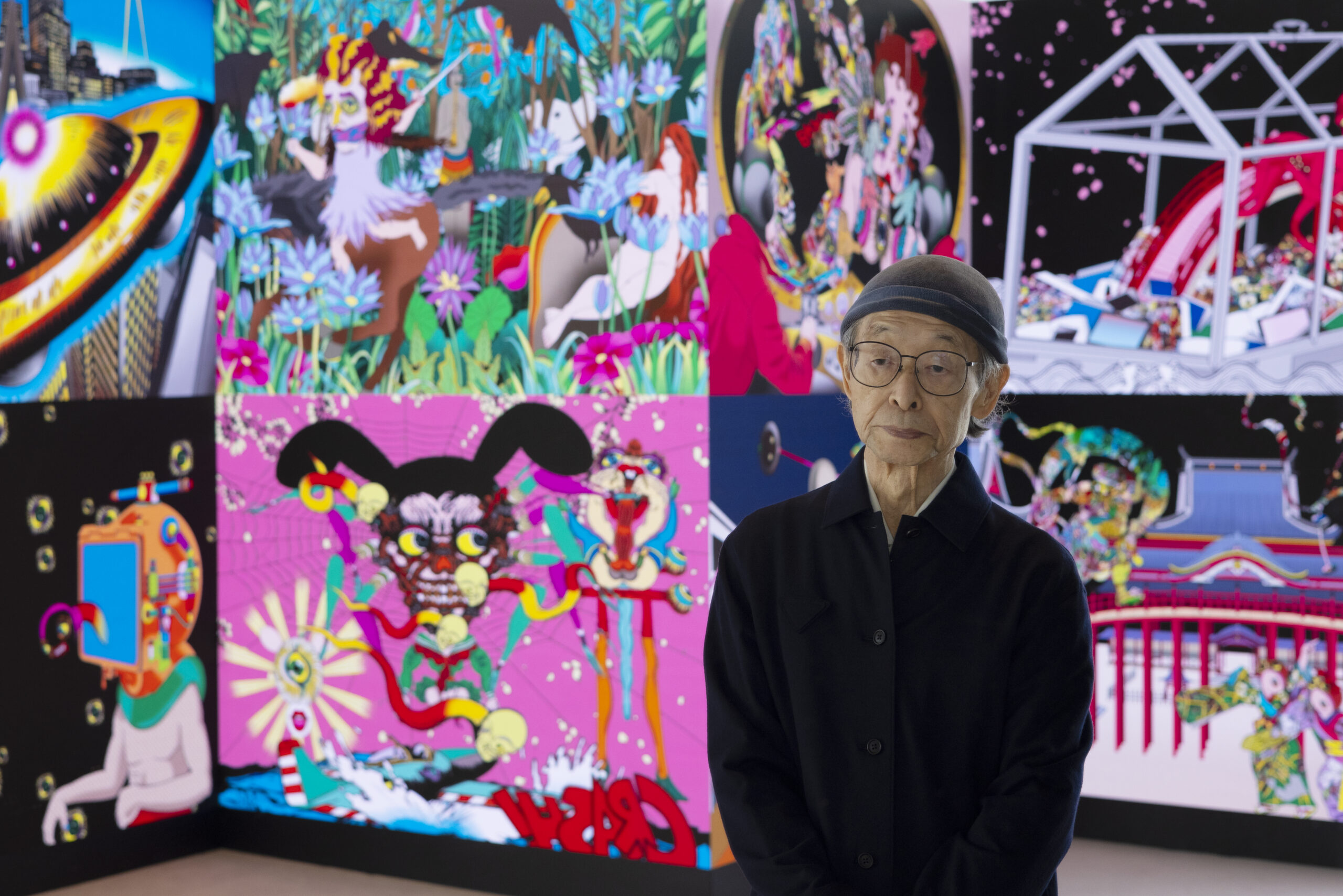
Keiichi Tanaami
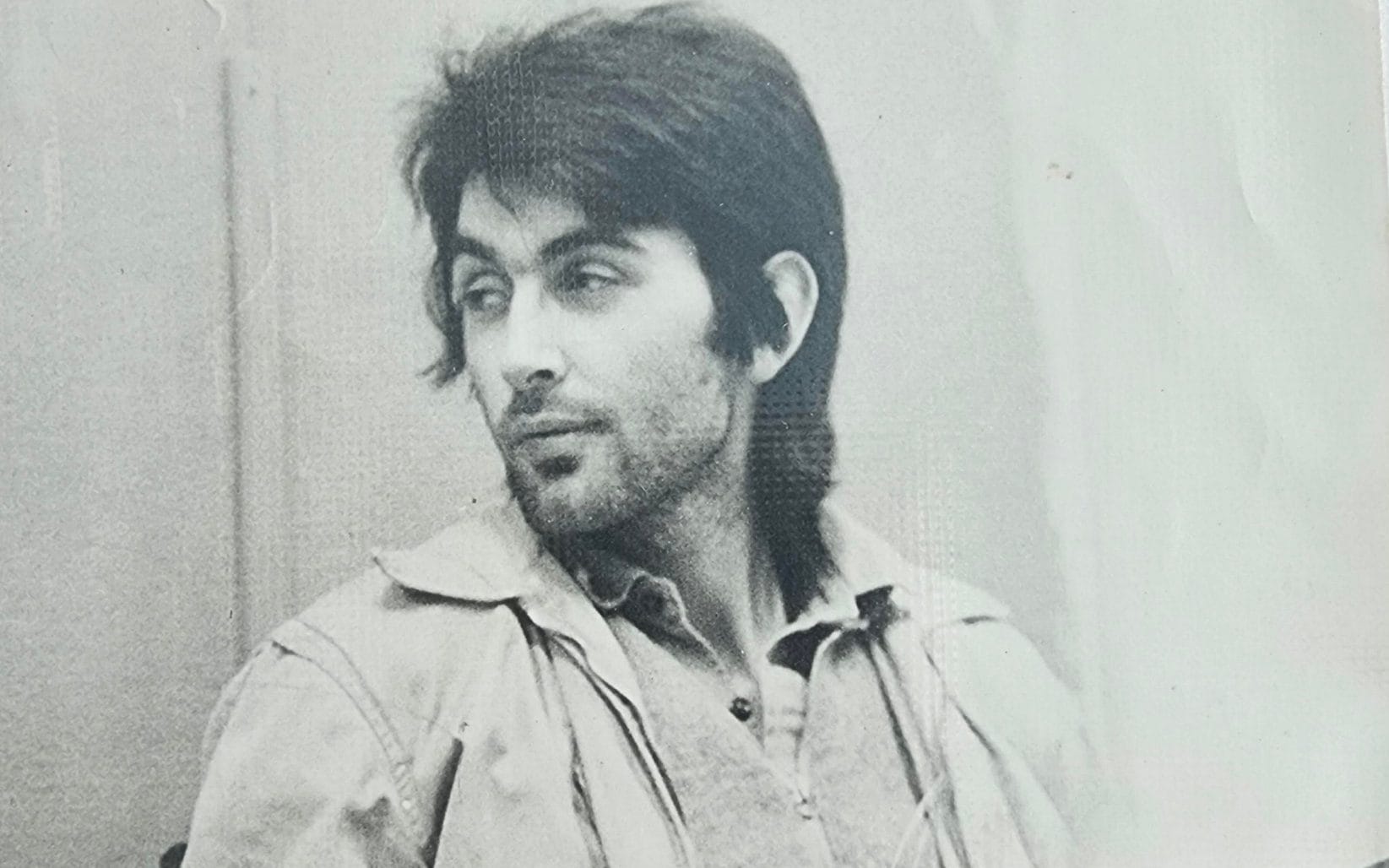
Born in Tokyo in 1936, and passed away in 2024. Graduated from Musashino Art University. Tanaami, who actively traverses the boundaries between professions through his eclectic work as an art director, graphic designer, illustrator, videographer, and artist, is a highly acclaimed role model for today’s generation of cross-disciplinary artists. Employing the design methodology of ‘editing,’ he continues to engage in a creative practice that extends beyond the framework of fine art, producing a diverse oeuvre that includes collages, prints, drawings, animation, experimental films, paintings, three-dimensional works, and installations. He is also widely recognized internationally as a Japanese pioneer in the ever-expanding context of Pop Art.