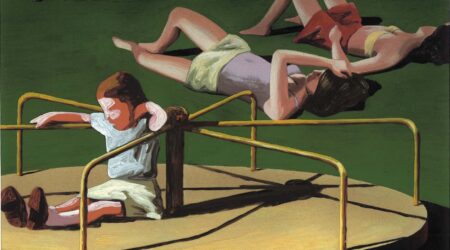
78 Tours
Georges Schwizgebel
Switzerland
1985
04:00
A subjective camera view and a fixed frames alternates on a waltz played by an accordion triggering a short story that evokes the passing of time.

Aug 20th (Thu) 15:00~ @JMS ASTER PLAZA Grand Hall
This special program is dedicated to the works of Swiss animation filmmaker Georges Schwizgebel, who serves as the President of the Jury for the HAS Competition. Drawing from a career spanning more than five decades, the director has personally selected some of his most representative works, which will be presented alongside a special talk by the artist himself.
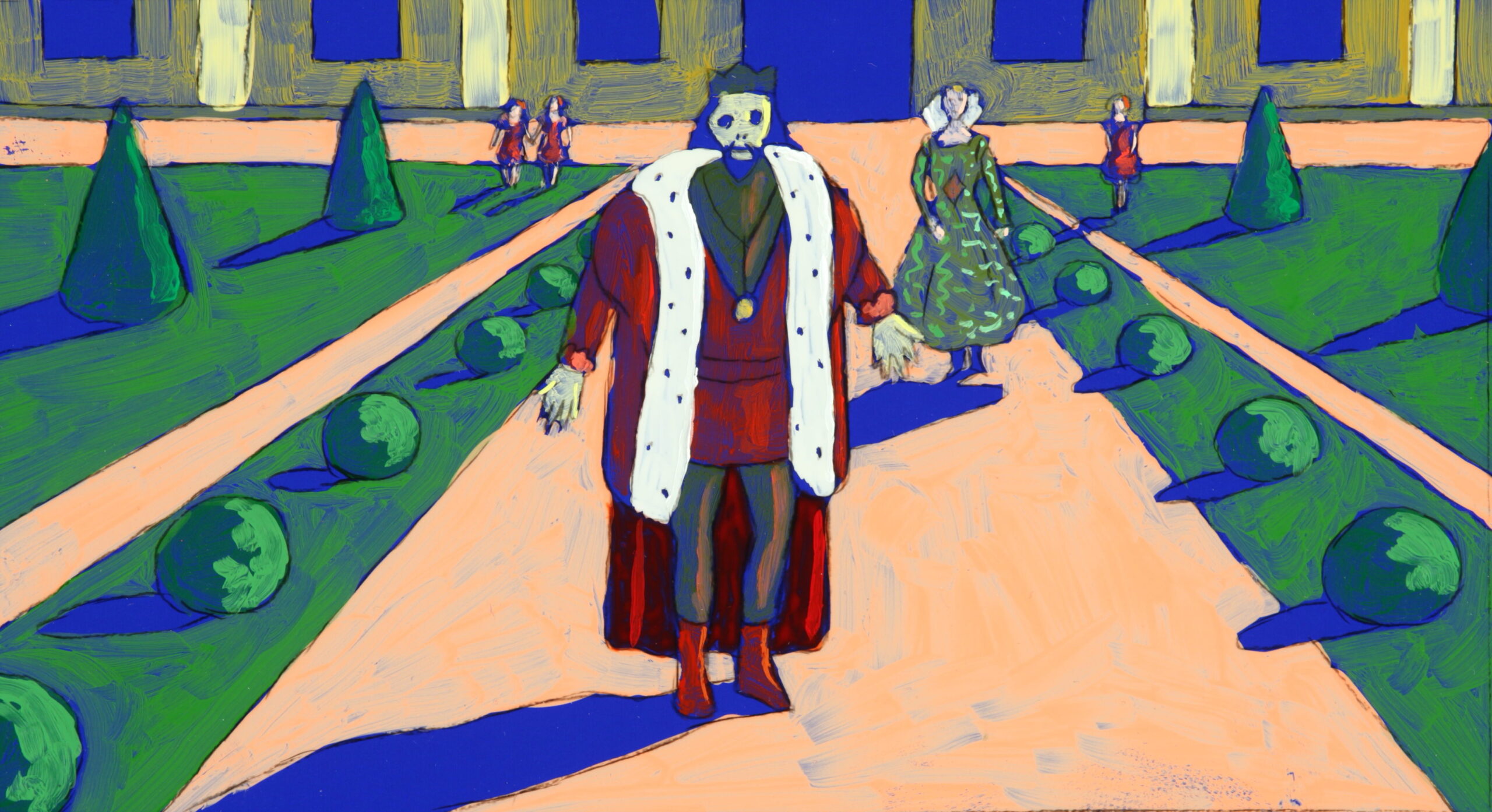
Guest: Georges Schwizgebel
A subjective camera view and a fixed frames alternates on a waltz played by an accordion triggering a short story that evokes the passing of time.
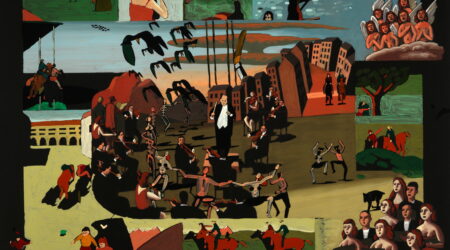
Using a six second cycle an animated painting illustrates an extract of an opera.
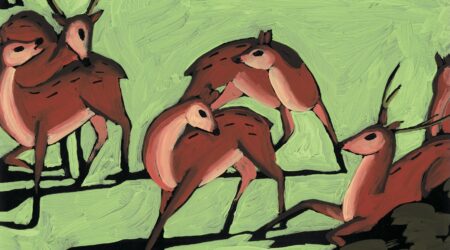
The story of a young deer deceived by appearances, based on a Tale from Liu Zongyuan (773-819)
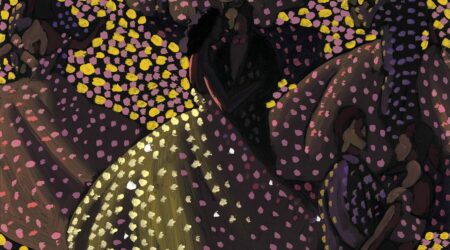
The adventures of Cinderella told in several scenes and cloud images.
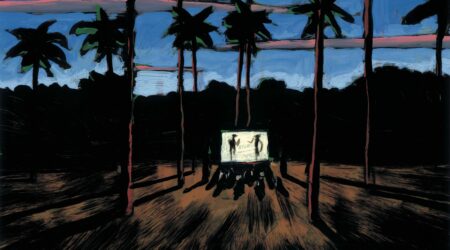
A man trades his shadow for wealth but, disappointed by the result, he has to resign himself with some seven league boots to help him find his way.
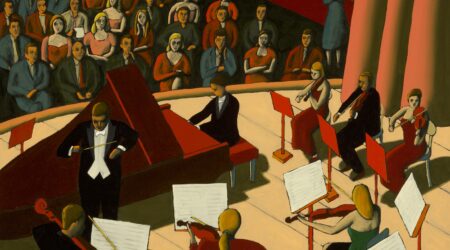
A visual and musical game which builds and destroys itself on the speed rhythm of Serge Prokofiev’s Scherzo to Piano Concerto No.2
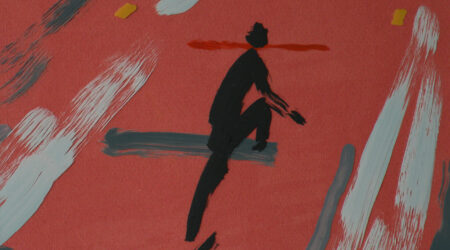
Between a wave’s rhythm and the breath of a young woman in her sleep, some animated paintings go on modifying each other.
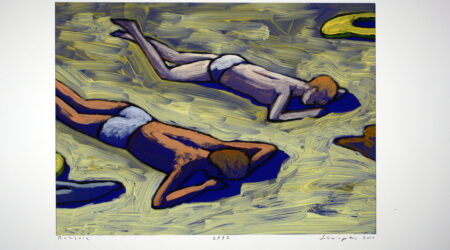
A casual meeting on a plane and watching a movie turns into a virtual romance.
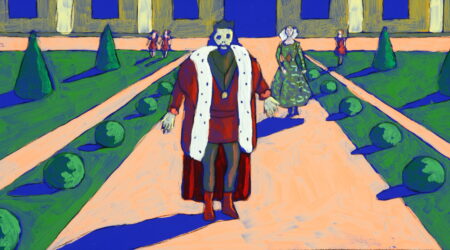
A father rides with his son through the forest. The sick child thinks he sees the Erlking, who both charms and frightens him. Based on Goethe’s poem Erlkönig and the eponymous music of Schubert/Liszt.
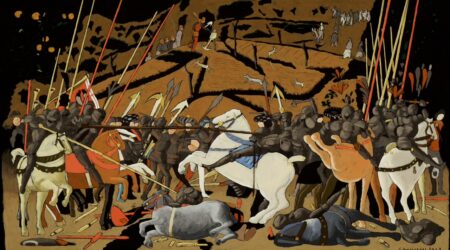
A movement within a painting, which begins with the savagery o a battle and comes to a halt in a rendition of a masterpiece of the 15th Century by Paolo Uccello.
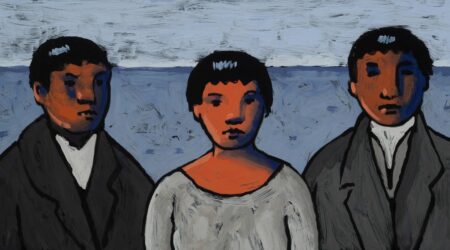
The return of three Anglicized native people to their country or the beginning of a meeting with the modern world that will destroy them. This is a creative interpretation of a true adventure story of three natives from Tierra del Fuego who were kidnapped by a humanist captain in 1829. He brought them to London where they were educated for three years in the values of Western civilization. On their return trip Charles Darwin was on the boat with them.
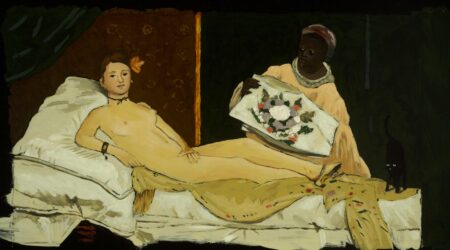
An immersion in art through two paintings on the same subject created half a century apart. Two paintings that relate to each other, or the representation of a woman of color in the 19th and 20th centuries. The first part is punctuated with references to 19th century paintings, Jean-François Millet, Henri Fantin-Latour (Manet's studio) and John Constable. People of color are depicted as servants or working in cotton fields. The second part quotes 20th century paintings, Vincent van Gogh (he lived in the previous century but his painting announces the next century), Albert Marquet, Louis Soutter, Francis Bacon, Giorgio de Chirico. Olympia (1863) by Edouard Manet is a painting in which we see a naked women staring confidently at the viewer and behind her a black maid holding a bouquet of flowers no doubt offered by an admirer. In reference to Olympia, Félix Vallotton painted La Blanche et la Noire (1913) which shows a young naked white woman, and next to her a dressed black woman, probably her partner, who is smoking a cigarette. The end credits imitate a work by Jean-Michel Basquiat, a painter of Haitian origin.
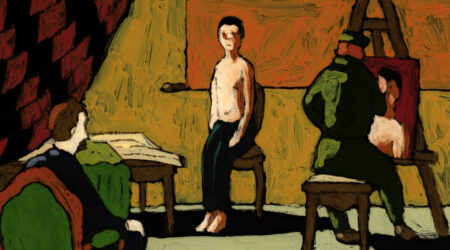
By the magic of a wish, Dorian Gray retains the grace and the beauty of youth. Only his painted portrait will age. Shielded by an apparent innocence, he commits his crime with impunity. Dorian Gray, envious of the beauty of a portrait just painted by his friend Basil, wishes to reverse this: to remain eternally young while his portrait ages in his place. His wish comes true, and he must hide the portrait. Lord Henry, another friend, greatly influences Dorian, encouraging him to indulge in life to the fullest before aging. Dorian falls in love with Sibyl, an actress in a shabby theatre, but abandons her when her acting deteriorates after experiencing true love, unable to feign it on stage. Heartbroken, she commits suicide, and years later, her brother James seeks this “prince charming” to avenge his sister. Eventually, Dorian meets a young peasant girl, Hetty Merton, whom he also leaves to protect her from being corrupted like his previous lovers. Yet, faced with her sorrow, he resolves to destroy the portrait, which he holds responsible for all its ills.
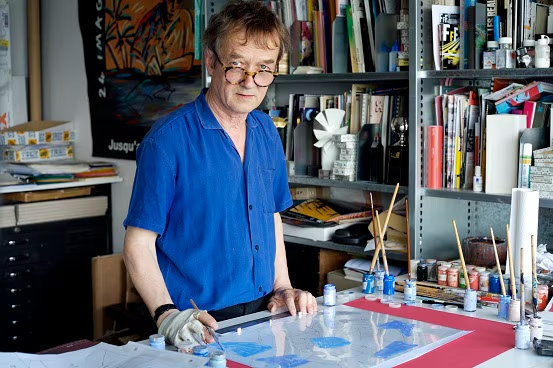
The animation director and producer Georges Schwizgebel (1944) has created a remarkably original body of work. His films-whose technical execution is always masterful-are marked by a playful approach to narrative, spectacular formalism and the intermingling of visuals and music. His first film, The Flyght of Icarus (1974) begins a career that currently numbers 22 films, which have gone to win numerous awards at prestigious international festivals (such as Cannes, Berlin, Chicago, Locarno, Hiroshima, Stuttgart and Ottawa. The Ride to the Abyss (1992) is regularly cited as one of the finest animated films of all time. In 2017 Georges Schwizgebel receives the Honorary Cristal of Annecy festival, in 2018 the Swiss film award of Honor, and becomes a member of the Oscar’s academy, in 2019 he was appointed officer of the Order of Arts and Letters (France) and receives the Lifetime Achievement Award at the Zagreb Animafest 2020, and get the Grand Prix in HAS 2022 with Darwin’s Notebook.